
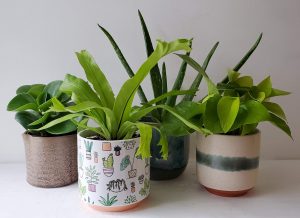
Pothos
Pothos is one of the easiest plants to grow & one of the most popular. It’s a hardy trailing plant perfect for hanging baskets, totems, or trellises. They come in a variety of colors and leaf shapes.
Pearls & Jade – Golden – Neon – Jade – Marble Queen – Silver
Light
Low- bright light. The darker the leaf the less light a pothos needs
Care
Super easy. Perfect beginner plant. Trim runners for bushier plant. Clippings are fun & easy to water propagate
Watering
Water when top 2” of soil is dry. Careful not to overwater.
Fertilizer
Fertilize with ½ solution every 2 weeks in spring/summer. Once a month in fall.
Succulents & Cactus
Aeonium – Aloe – Burro’s Tail – Cactus – Echeveria – Euphorbia – Hawthoria – Graptovia
Light
Bright indirect light. Gradually introduce new plant to direct sunlight to avoid scorching
Care
Super easy. Careful not to overwater, they are desert natives. Fun & easy to propagate
Watering
Water very lightly (less than a shot glass) once every 1-2 weeks
Fertilizer
Requires well draining soil. Rotate often. Lightly fertilize spring/summer
Orchid
Orchids have been a popular flowering plant for decades. Their classic & elegant style is undeniable. They are relatively easy to care for, making them a wonderful gift & add to any interior space.
Light
Bright, indirect light. Place in East or North facing windows
Watering
Water when top 2” of soil is dry. Careful not to overwater. Relatively easy. Overwatering leads to root rot
Fertilizer
Fertilize with ½ solution every 2 weeks in spring/summer. Once a month in fall.
Fern
Ferns come in a wide variety of leaf sizes, shapes & textures. Group ferns & other plants together in a bright kitchen or bathroom to increase humidity. Pretty & practical, they are easy to grow in the right environment.
Maidenhair – Bird’s Nest – Kangaroo – Lemon Button – Blue Star – Staghorn – Rabbit’s Foot
Light
Medium to indirect bright light. Ferns like North or East facing window
Humidity
Ferns like humidity, mist indirectly with lukewarm water. Put them on a pebble & water filled tray, or plant in a terrarium to create a moist environment
Watering
Water most ferns with enough water to keep the soil evenly moist. To avoid root rot, keep soil from being soggy
Fertilizer
Fertilize with ½ solution every 2 weeks in spring/summer & once a month in the fall
Airplant
The “Tillandsia” species doesn’t require soil to grow. Instead they absorb water and nutrients through their leaves. The unique shapes make them very popular & collectable. Most are native to Central & South American forests or deserts. They colonize on rocks & trees by climbing onto them with their roots.
Light
Bright indirect light
Care
Relatively easy. They require good air circulation. Fun to decorate with.
Watering
Totally submerge in a bowl of water for one hour. Place upside down in a towel until dry. Water T. Xerographica air plants once every 3-4 weeks, smaller air plants need a bath once a week. The hotter the environment/ season the more frequently you need to water your tillandsia
Leafy Tropical Plant
Leafy tropical plants are loved for their bold shapes, rich colors & lush foliage. These plants bring a vibrant, jungle feel to any space and thrive in warm, bright environments. With the right balance of light, water & humidity, they are rewarding and long-lasting houseplants.
Calathea – Ficus – Fittonia – Monstera – Philodendron – Schefflera – Alocasia
Light
Medium to bright indirect light. Most leafy tropicals prefer East or filtered South/West-facing windows. Avoid harsh direct sun, which can scorch leaves.
Humidity
Leafy tropical plants enjoy higher humidity. Mist lightly with lukewarm water, use a pebble & water tray, group plants together, or place in kitchens and bathrooms to boost moisture levels.
Water
Water when the top inch of soil feels dry. Keep soil evenly moist but never waterlogged. Good drainage is essential to prevent root rot.
Fertilizer
Fertilize with ½ strength balanced fertilizer every 2 weeks during spring and summer, and once a month in fall. Reduce or stop feeding in winter.
Semi- Succulent Tropical Plants
Semi-succulent tropical plants store moisture in their leaves or stems, making them more tolerant of missed waterings. With their unique textures and architectural forms, these plants are both stylish and low-maintenance, perfect for bright indoor spaces.
Hoya – Peperomia – Zamioculcas zamiifolia – Sansevieria – Ceropegia – Palms
Light
Medium to bright indirect light. Many semi-succulent tropicals adapt well to a range of light conditions, but brighter light encourages healthier growth. Some can tolerate lower light, though growth may slow.
Humidity
Average household humidity is sufficient. While they appreciate occasional misting, these plants do not require high humidity and prefer good air circulation.
Water
Allow soil to dry partially between waterings. Water thoroughly, then let excess water drain away. Avoid keeping soil constantly wet, as this can lead to root rot.
Fertilizer
Fertilize with ½ strength balanced fertilizer every 3–4 weeks during spring and summer. Reduce feeding in fall and winter.